
Founded in 1982 in Ravarino, Italy, Stone Island didn’t just set out to make clothes – it set out to re-engineer them. The brainchild of graphic designer and garment engineer Massimo Osti, the label emerged as an experimental offshoot of his C.P. Company, defined from the start by a willingness to push fabric technology further than anyone else.
The result was a line that looked and felt unlike anything else in menswear at the time: utilitarian, industrial, and immediately recognizable by the ‘badge’ – a removable compass patch label showing the Stone Island Wind Rose and symbolizing love for the oceans and the aim for constant research.

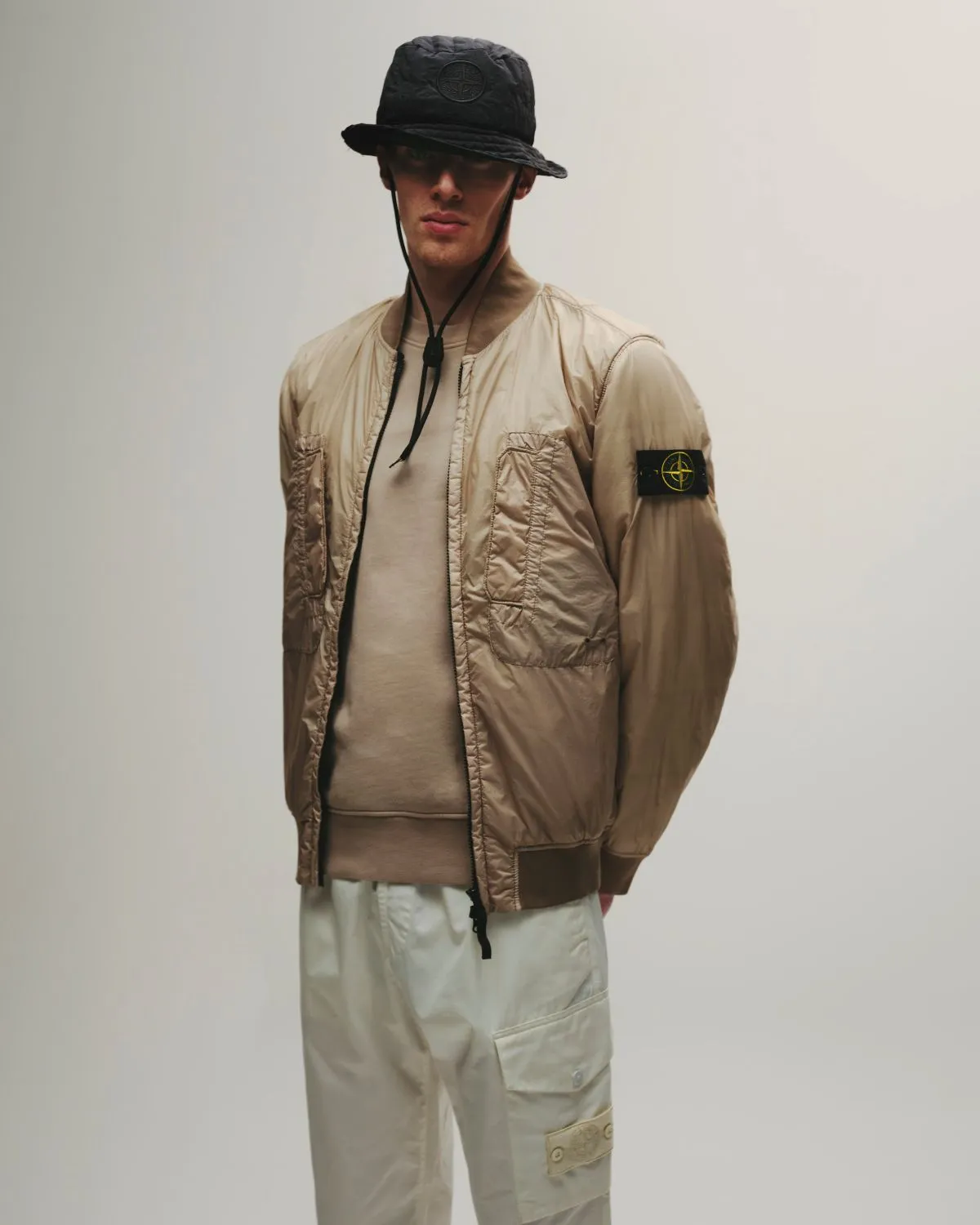
The very first collection set the tone, offering an unprecedented look and durability with jackets crafted from Tela Stella: taking cues from the durability of military garments, the fabric originates from a study of the rugged characteristics of military truck tarpaulins. The cotton canvas was treated with a pigmented resin applied to both sides in contrasting tones, before the finished piece underwent an extensive enzyme wash. Not only did this process soften the dense material – it also lent the garment its distinctively faded look.
This spirit of curiosity and technical mastery became Stone Island’s foundation. Over the decades, the brand pioneered countless dyeing techniques and material innovations – from Raso Gommato (a combination of military-derived cotton and satin weave) to reflective and heat-sensitive fabrics – each garment as much a laboratory result as a piece of apparel.

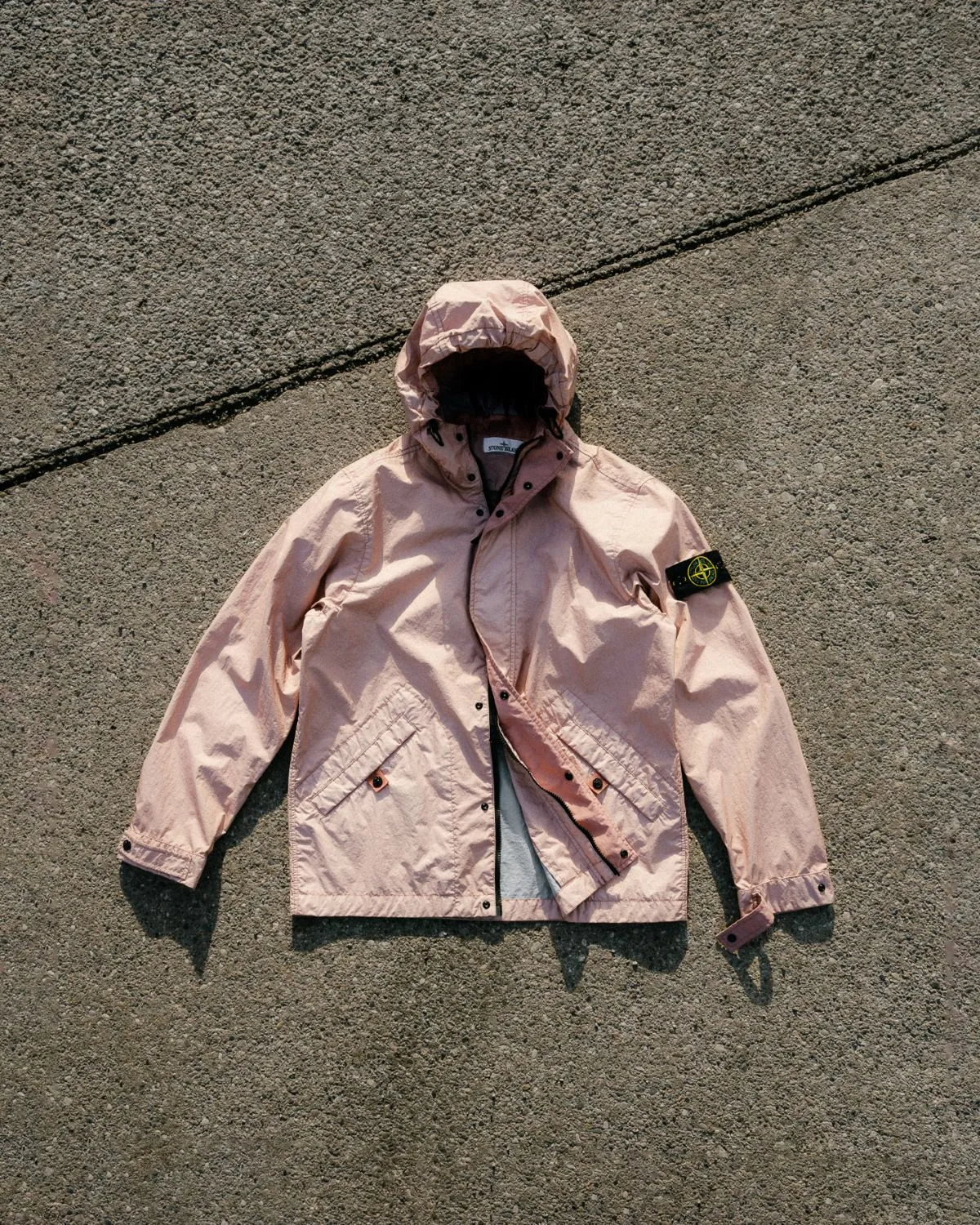
To date, Stone Island has developed more than 60,000 dye recipes, pushing the boundaries of color experimentation further than any other brand. Under the leadership of Carlo Rivetti, who took the helm in 1993, the label deepened this commitment to research and experimentation, further solidifying its role as the benchmark for textile innovation.
Yet innovation alone doesn’t explain Stone Island’s cult status. The Milanese Paninaro youth – known for blending classic Americana with cutting-edge Italian sportswear, and named after the panini bars they frequented – was the first subculture in the early ’80s to adopt Stone Island.
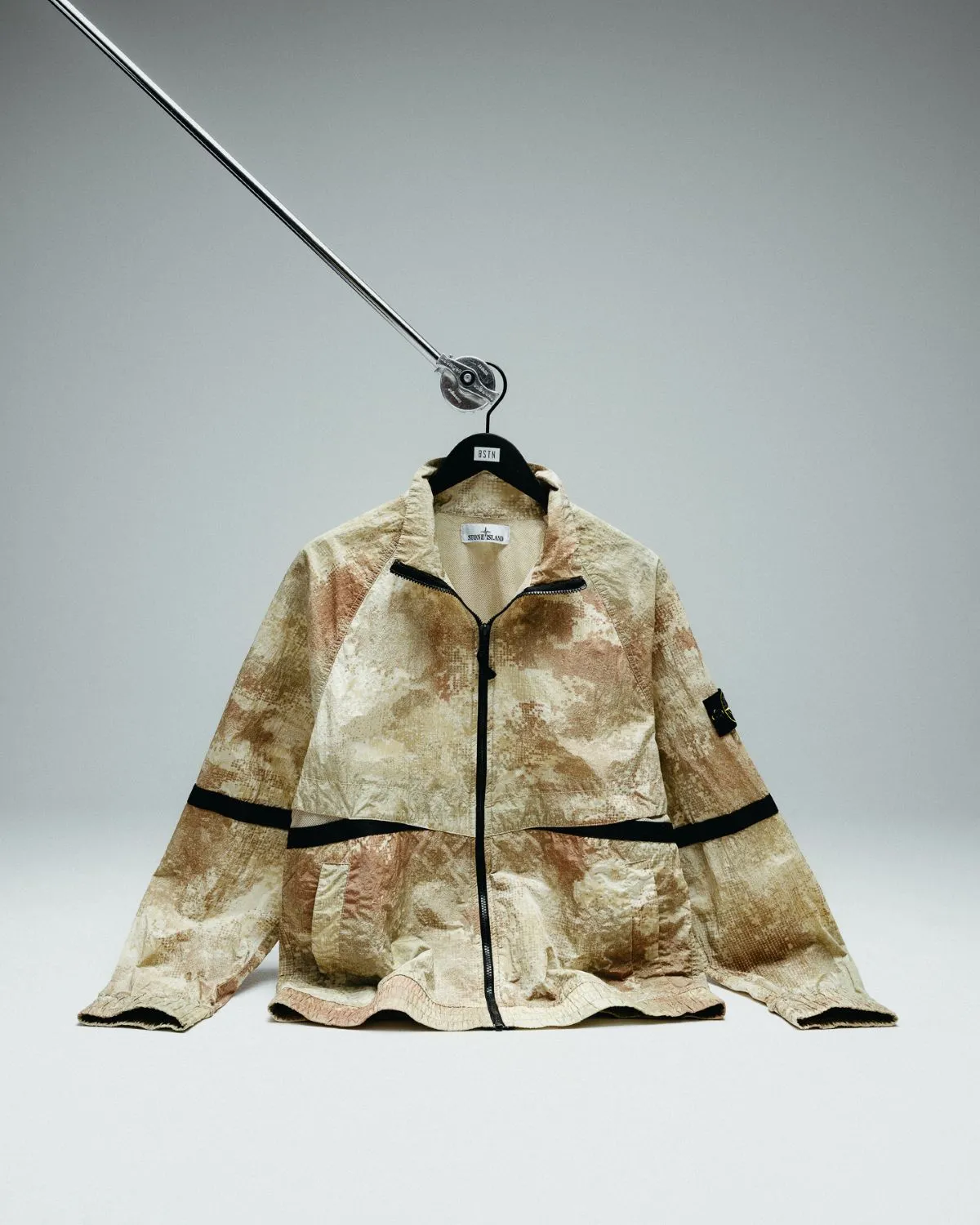

By the late ’80s and early ’90s, the brand had been heavily embraced by UK football casuals. Unlike the hooligans before them, casuals avoided club kits to dodge police attention, instead flaunting their style in rival territories. The scarcity of Stone Island fueled a culture of one-upmanship, with the compass badge becoming a signifier of status and belonging – sharp, luxurious while understated, yet instantly recognizable. For them, the patch wasn’t just a logo, it was a signal.
That mythology didn’t stay confined to one subculture. Hip hop artists, from Drake to Travis Scott, years later brought the brand into the global spotlight, spotlighting its distinctive mix of toughness, sophistication, and head-turning dyes. At the same time, high-fashion circles began to take notice, particularly after Stone Island’s partnership with Supreme in the mid-2010s bridged streetwear and luxury in new ways. The result: a brand that was no longer niche, but still felt like a code.


Today, Stone Island’s in-house color laboratory continues to pioneer treatments ranging from glow-in-the-dark fabrics to garments that change color with temperature shifts, alongside ultra-lightweight down engineered for weather resistance. Whether it’s outerwear, overshirts, or parkas, every piece carries the brand’s DNA: a marriage of science and style.
And yet, for all its technological prowess, Stone Island has never lost its sense of identity. The silhouettes remain grounded in functionality, elevated through innovation rather than ornament. That balance explains why the brand has endured across scenes and generations: timeless in utility, endlessly progressive in execution.